How Commercial Standby Generators Work: A Complete Guide for Facilities
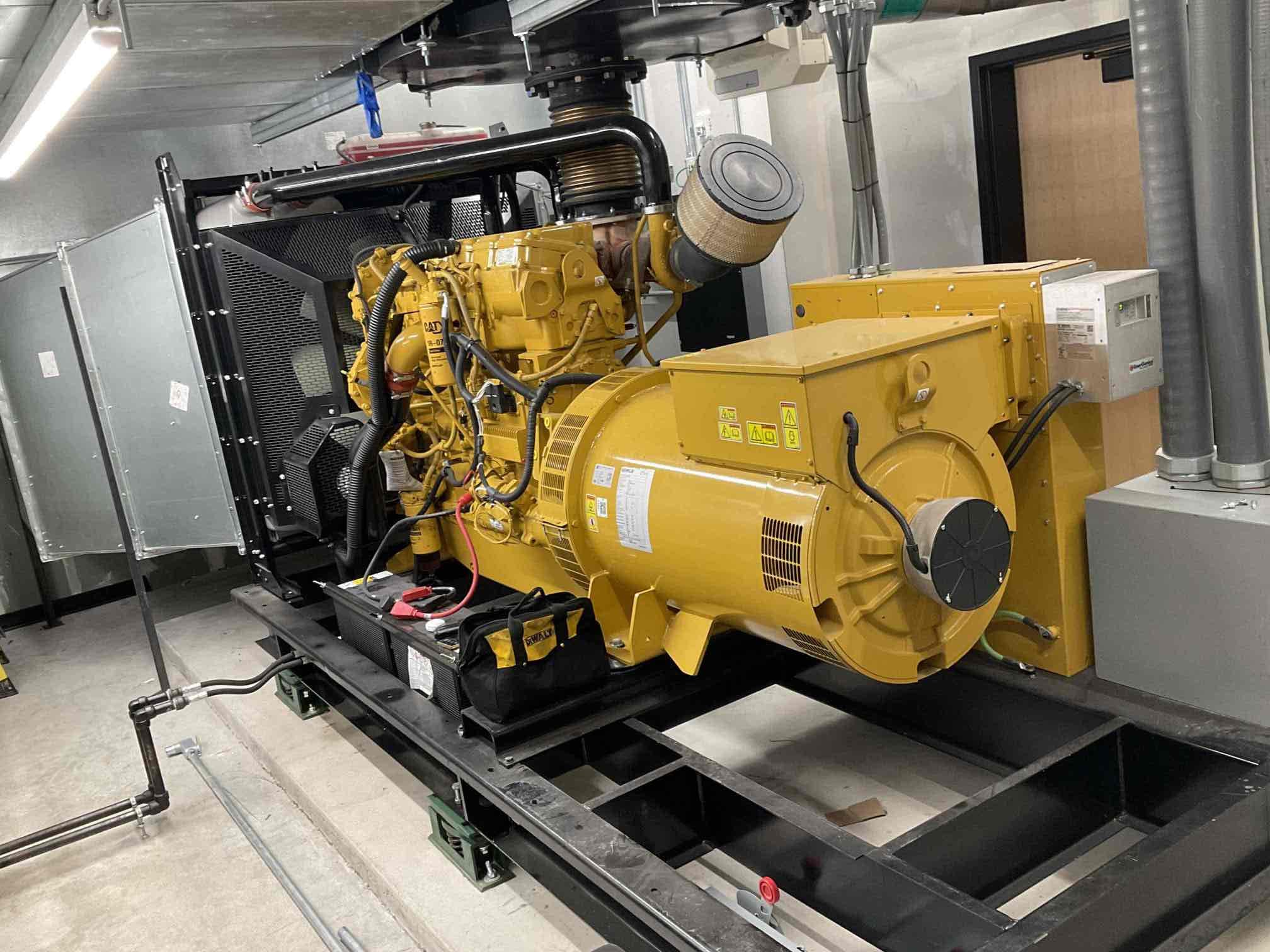
Commercial standby generators are critical infrastructure for hospitals, data centers, manufacturing plants, municipalities, and large commercial buildings. When utility power fails, these systems automatically restore electricity, protecting operations, equipment, inventory, and, in some cases, lives.
This guide explains how commercial standby generators work, the major system components, and what facility managers need to know to ensure reliability.
Table of Contents
What Is a Commercial Standby Generator?
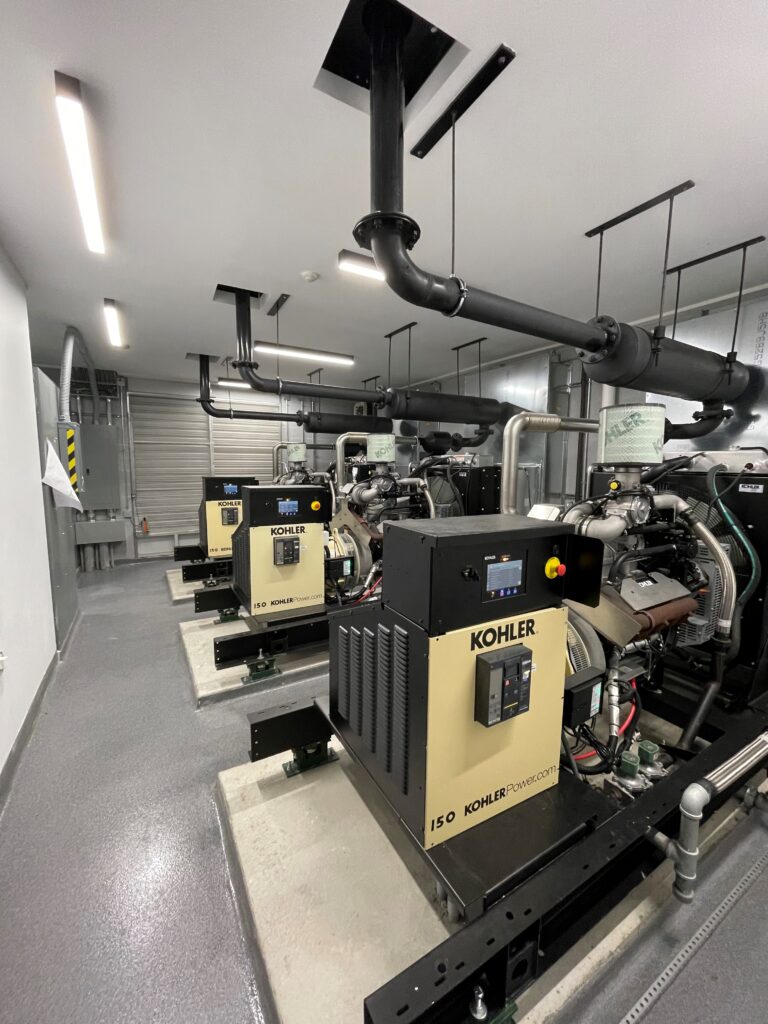
A commercial standby generator is a permanently installed backup power system that automatically supplies electricity during a utility outage. Unlike portable units, these systems are integrated into a building’s electrical distribution system and operate without manual intervention.
Most commercial systems are powered by diesel fuel, although natural gas options are also common. System capacities typically range from 20 kW to several megawatts, depending on the facility’s total connected load and critical load requirements.
How a Commercial Generator System Works
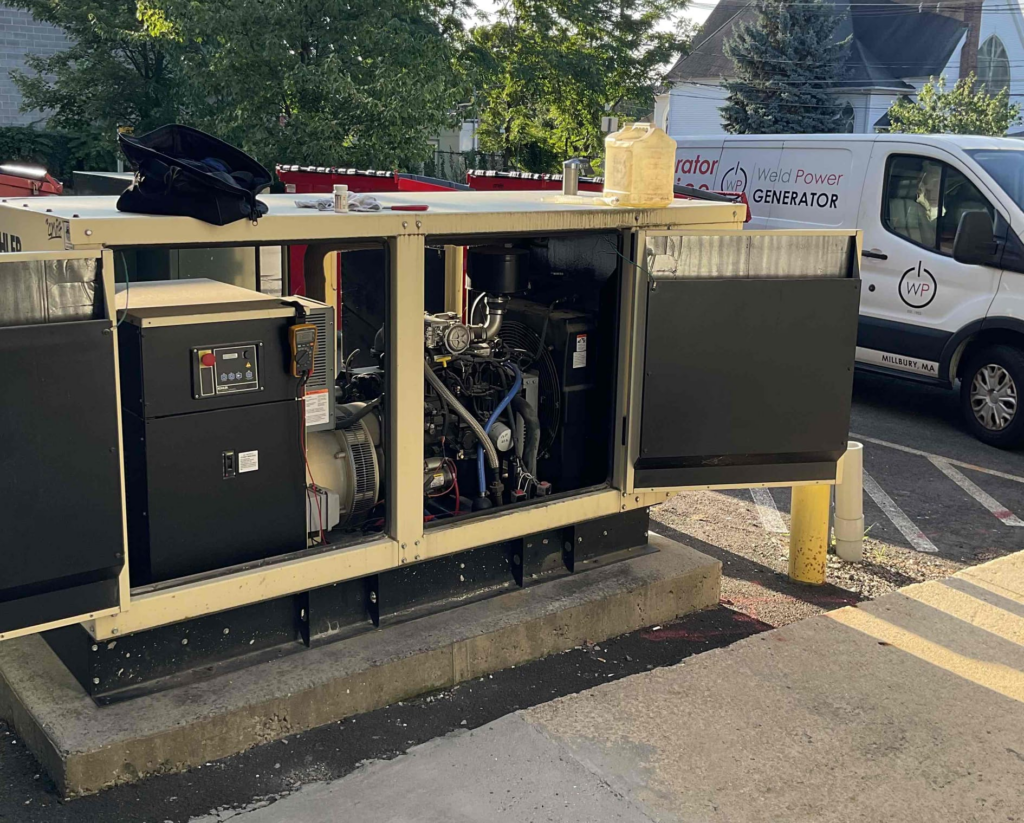
A commercial standby generator system functions through an automatic sequence of detection, startup, load transfer, operation, and retransfer.
1. Utility Power Monitoring
The Automatic Transfer Switch (ATS) continuously monitors incoming utility voltage. If voltage drops below acceptable thresholds, or fails completely, the ATS initiates a start signal to the generator after a brief programmed delay (typically 3–10 seconds).
This prevents unnecessary starts during momentary voltage fluctuations.
2. Generator Startup
Upon receiving the start signal:
- The battery-powered starter motor engages.
- The engine accelerates to rated speed (commonly 1800 RPM for 60 Hz systems in the U.S.).
- The generator head, sometimes referred to as an alternator, begins producing electrical power.
- Voltage and frequency stabilize within programmed tolerances.
Modern commercial systems typically restore power within 5 – 30 seconds of outage detection.
3. Load Transfer to Generator Power
Once output voltage and frequency are verified, the ATS transfers the building load from utility power to generator power.
In healthcare facilities, emergency power systems must meet performance standards defined by National Fire Protection Association (NFPA), including rapid transfer requirements for life-safety branches.
4. Continuous Operation During the Outage
While operating under load, the generator’s control system monitors:
- Oil pressure
- Coolant temperature
- Engine speed
- Output voltage and frequency
- Overcurrent conditions
If a critical fault occurs, protective shutdown logic activates to prevent catastrophic damage.
5. Utility Power Restoration
When utility power returns and remains stable for a programmed delay period:
- The ATS retransfers the load back to utility power.
- The generator enters a cooldown cycle (typically 5 minutes unloaded).
- The engine shuts down automatically.
- The system returns to standby mode.
Major Components of a Commercial Standby Generator System
A complete commercial backup power system includes more than just the generator itself.
Engine
The engine provides mechanical energy to drive the generator head. Diesel engines are widely used due to high torque, durability, and fast load acceptance.
Generator Head (Alternator)
The alternator converts mechanical energy into electrical energy via electromagnetic induction. It must maintain stable output voltage and frequency to prevent damage to connected equipment.
Automatic Voltage Regulator (AVR)
The AVR adjusts excitation to maintain consistent voltage under varying load conditions.
Governor
The governor regulates fuel delivery to maintain constant engine speed and frequency (60 Hz in the United States).
Control Panel
The control system manages startup, shutdown, diagnostics, alarms, and fault logging. Modern controllers often include remote monitoring capability.
Fuel System
For diesel systems, this includes:
- Main fuel tank
- Day tank (if applicable)
- Fuel transfer pumps
- Filters
- fuel lines
Fuel quality management is critical. Contaminated diesel can cause injector failure, power loss, or complete shutdown during an outage.
Cooling and Exhaust Systems
Liquid-cooled radiators dissipate heat during operation, while exhaust systems safely vent combustion gases and may include silencers or emissions controls.
Open Transition vs. Closed Transition Transfer
Most commercial facilities use open transition transfer, which creates a brief interruption of power when switching between utility and generator sources.
In high-availability environments such as data centers, closed transition or paralleling switchgear systems may be used. These synchronize the generator with utility power to allow near-seamless transfers.
Generator Sizing for Commercial Buildings
Proper generator sizing is critical to performance and longevity. Engineers evaluate:
- Total connected load
- Motor starting currents
- Non-linear loads (UPS systems, VFDs)
- Future expansion plans
Undersized systems may experience voltage dips and frequency instability. Oversized diesel generators may suffer from wet stacking if they operate under insufficient load for extended periods.
Load bank testing is commonly used to validate generator performance under full-rated capacity.
Standby vs. Prime vs. Continuous Power Ratings
Commercial generators are classified by duty rating:
- Standby power: Operates only during outages; no overload capability.
- Prime power: Designed for extended runtime where utility is unreliable.
- Continuous power: Operates at a constant load indefinitely.
Misapplying generator ratings can shorten equipment life and void warranties.
Why Preventative Maintenance Is Critical
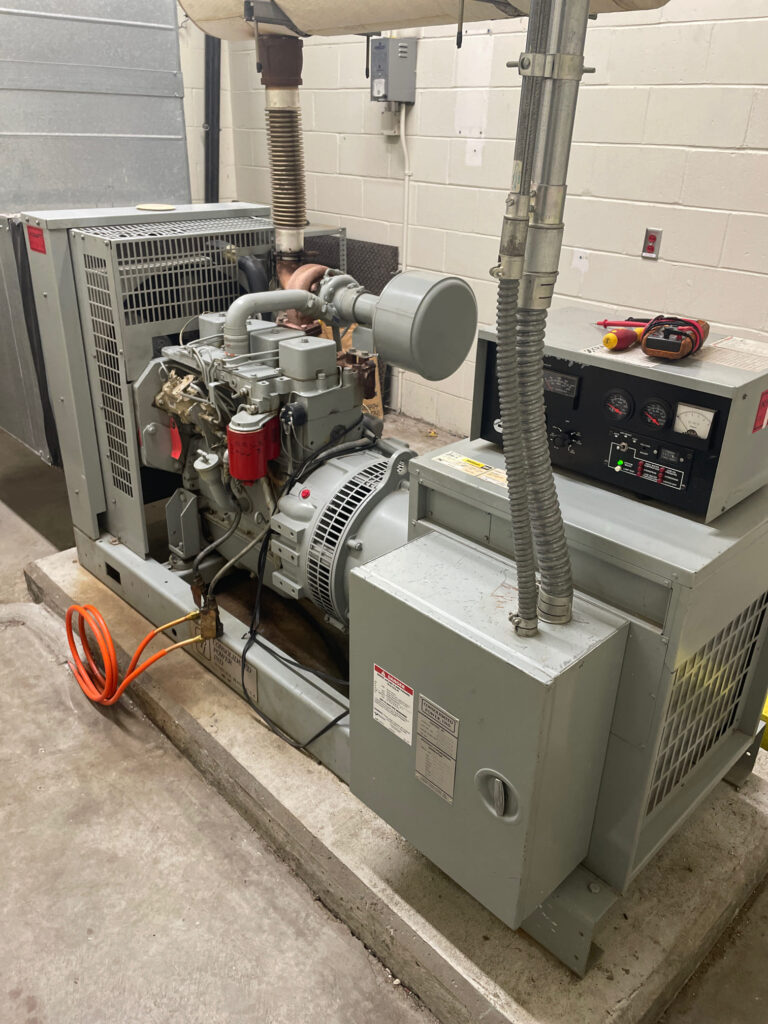
Commercial standby generators often sit idle for long periods, but must perform instantly during emergencies. Preventative maintenance typically includes:
- Oil and filter changes
- Coolant inspection
- Battery testing
- Fuel sampling and treatment
- Control panel diagnostics
- Exercise testing under load
Routine service reduces the risk of startup failure during critical events such as storms, grid instability, or infrastructure failures.
Frequently Asked Questions About Commercial Standby Generators
How long does a commercial standby generator last?
With proper maintenance, industrial standby generators can operate for 20–30 years or more, depending on runtime hours and environmental conditions.
How quickly does a commercial generator turn on?
Most systems restore power within 5 – 30 seconds after detecting a utility outage.
Do commercial generators run automatically?
Yes. Once installed and properly configured, the system operates fully automatically through the Automatic Transfer Switch.
Final Thoughts: Protecting Your Facility from Power Loss
A properly designed and maintained commercial standby generator system is not just backup equipment, it is a critical business continuity asset. Whether protecting refrigerated inventory, preventing production downtime, or ensuring life-safety compliance, reliable backup power directly impacts operational stability.
If your facility depends on uninterrupted power, routine maintenance, proper fuel management, and professional system evaluation are essential to long-term reliability.