
The Unsung Hero of Your Generator: Why the Exhaust System Deserves Your Attention
When most people think about generator maintenance, they think about fuel, oil changes, and keeping the engine running. Rarely does anyone give much thought to the generator’s exhaust system, until something goes wrong. But for anyone who depends on reliable power, the exhaust system is one of the most critical components on your machine. Neglect it, and you’re not just risking equipment damage, you’re risking lives.
Table of Contents
What Does the Generator Exhaust System Actually Do?
At its most basic level, the exhaust system channels combustion gases away from the engine and, more importantly, away from the people working around it. But it does more than just route fumes. A well-functioning exhaust system:
- Reduces back pressure on the engine, helping it breathe efficiently and run at peak performance
- Dampens noise through the muffler/silencer, keeping jobsite decibel levels manageable
- Controls emissions, helping your equipment comply with EPA and local air quality regulations
- Protects engine internals by expelling heat and byproducts of combustion cleanly and consistently
Think of it as your generator’s respiratory system. When it works properly, you never think about it. When it doesn’t, everything suffers.
The Hidden Danger: Carbon Monoxide
Let’s address the most serious issue first. Generators produce carbon monoxide (CO), a colorless, odorless gas that is lethal in high concentrations. According to the CDC, generators are one of the leading causes of CO poisoning deaths in the United States, particularly during storms and power outages when people use them in enclosed or semi-enclosed spaces.
A compromised exhaust system, whether from a cracked manifold, loose connections, or a blocked outlet, can redirect CO where it doesn’t belong. Even outdoors, workers can be exposed to dangerous concentrations if the exhaust is improperly routed or if equipment is positioned too close to air intakes, doorways, or work areas.
This is not a theoretical risk. It is a life-safety issue, and it begins with the integrity of your exhaust system.
Performance Consequences of a Neglected Exhaust System
Beyond the safety implications, a degraded exhaust system directly impacts how your generator performs.
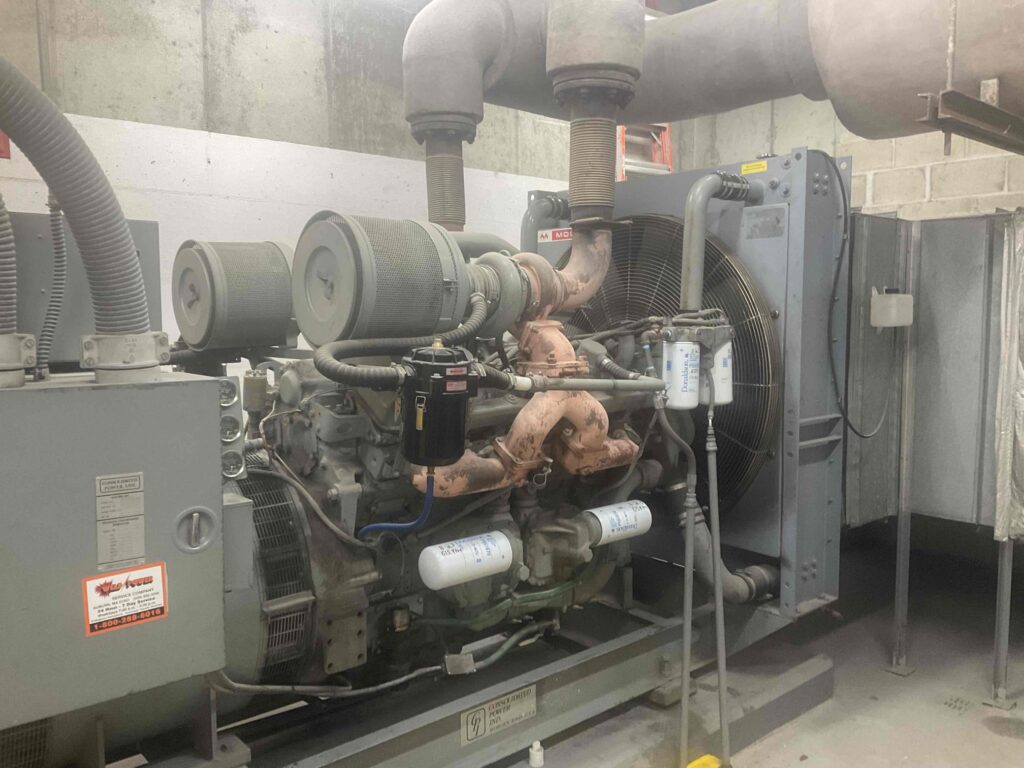
Increased Back Pressure Blockages, excessive bends in the exhaust run, or undersized piping all create back pressure that forces the engine to work harder to expel exhaust gases. This reduces fuel efficiency, causes the engine to run hotter, and accelerates wear on critical components like valves and pistons.
Reduced Power Output When an engine can’t exhaust efficiently, it can’t breathe in efficiently either. The result is a measurable drop in power output, exactly what you don’t want when you’re running your facilities off generator power.
Overheating The exhaust system plays a key role in thermal management. Compromised exhaust flow traps heat in the engine bay, which can lead to premature component failure and costly downtime.
When There’s a Turbocharger in the Mix
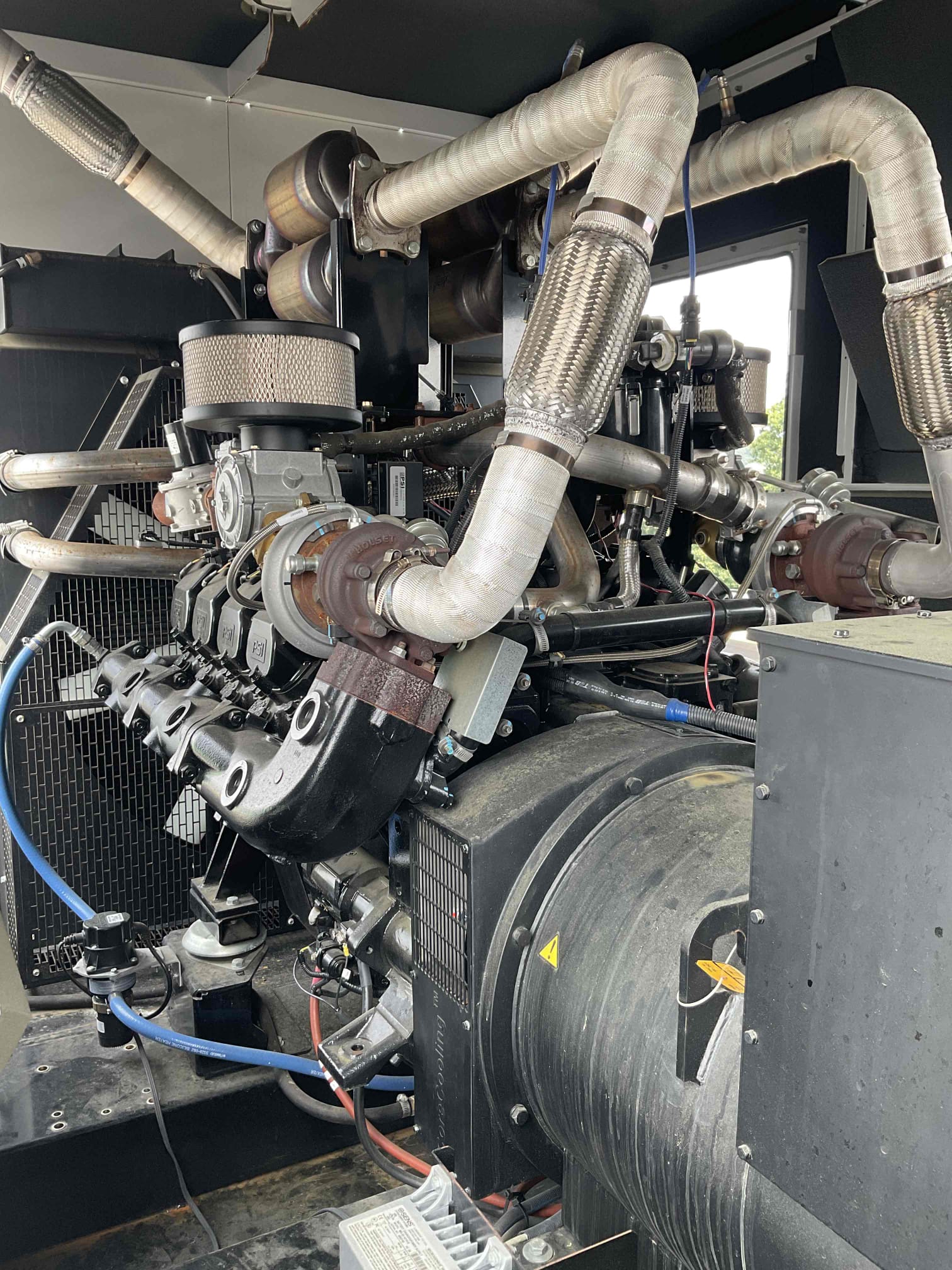
Many of today’s commercial generators are turbocharged. Turbos allow a smaller, lighter engine to produce significantly more power by forcing more air into the combustion chamber. But here’s what most operators don’t realize: the turbocharger is part of the exhaust system.
A turbocharger is driven entirely by exhaust gases. Hot, pressurized exhaust leaving the engine spins a turbine wheel inside the turbo, which in turn drives a compressor wheel that forces fresh air into the intake. It’s an elegant system, the engine essentially recycles waste energy to boost its own performance. But it also means that anything affecting exhaust flow directly affects turbo performance, and vice versa.
Back Pressure Affects Turbo Spool The turbocharger needs exhaust gases to flow through it freely and at the right velocity to spin up, or “spool”, efficiently. Excessive back pressure downstream of the turbo (caused by a clogged muffler, a kinked exhaust run, or an undersized outlet pipe) reduces that flow, forcing the turbo to work harder and spool more slowly. The result is turbo lag, reduced boost pressure, and less power, often without any obvious warning light or error code.
Oil and the Exhaust System Are More Connected Than You Think The turbocharger’s shaft and bearings are lubricated and cooled by engine oil. When a turbo begins to fail (often due to oil starvation, contaminated oil, or simply high hours) one of the first visible signs shows up in the exhaust: blue or bluish-white smoke as oil is drawn into the turbine and burned with the exhaust gases. If you see this, the turbo needs immediate attention. Running a generator with a failing turbo isn’t just an equipment problem, it compromises the entire exhaust stream and can accelerate damage throughout the system.
Exhaust Leaks Are More Dangerous Before the Turbo On a turbocharged engine, the exhaust manifold and the section of pipe feeding into the turbo inlet operate under the highest pressure and temperature in the entire system. A leak in this pre-turbo section doesn’t just lose exhaust gases, it robs the turbo of the flow it needs to build boost, and it exposes nearby components to extreme heat. These leaks can be subtle (a slight hiss at idle, faint soot around a joint) but their impact on performance and component life is significant.
What to Look For: Signs Your Exhaust System Needs Attention
Catching exhaust issues early can save you significant repair costs and prevent dangerous situations. Watch for these warning signs:
- Unusual exhaust color — Black smoke often indicates a rich fuel mixture or air restriction; blue smoke suggests oil burning; white or gray smoke can indicate coolant entering the combustion chamber
- Excessive noise — A sudden increase in exhaust noise usually points to a crack, hole, or loose connection somewhere in the system
- Visible rust, corrosion, or soot deposits around joints and connections
- Reduced fuel economy or power output without another obvious cause
- Strong exhaust smell in or around the equipment, never ignore this
Best Practices for Exhaust System Maintenance
Keeping your exhaust system in top condition doesn’t have to be complicated. Build these habits into your regular maintenance routine:
- Inspect visually before every use. Check for cracks, loose clamps, and any signs of soot or discoloration at connections.
- Keep the exhaust outlet clear. Debris, nesting animals, and mud can partially or fully block the outlet, especially on equipment that sits between jobs.
- Check mounting hardware. Vibration loosens clamps and brackets over time. Tighten anything that’s worked itself loose.
- Replace mufflers on schedule. Mufflers corrode from the inside out due to condensation and acidic exhaust byproducts. Don’t wait until they’re visibly failing.
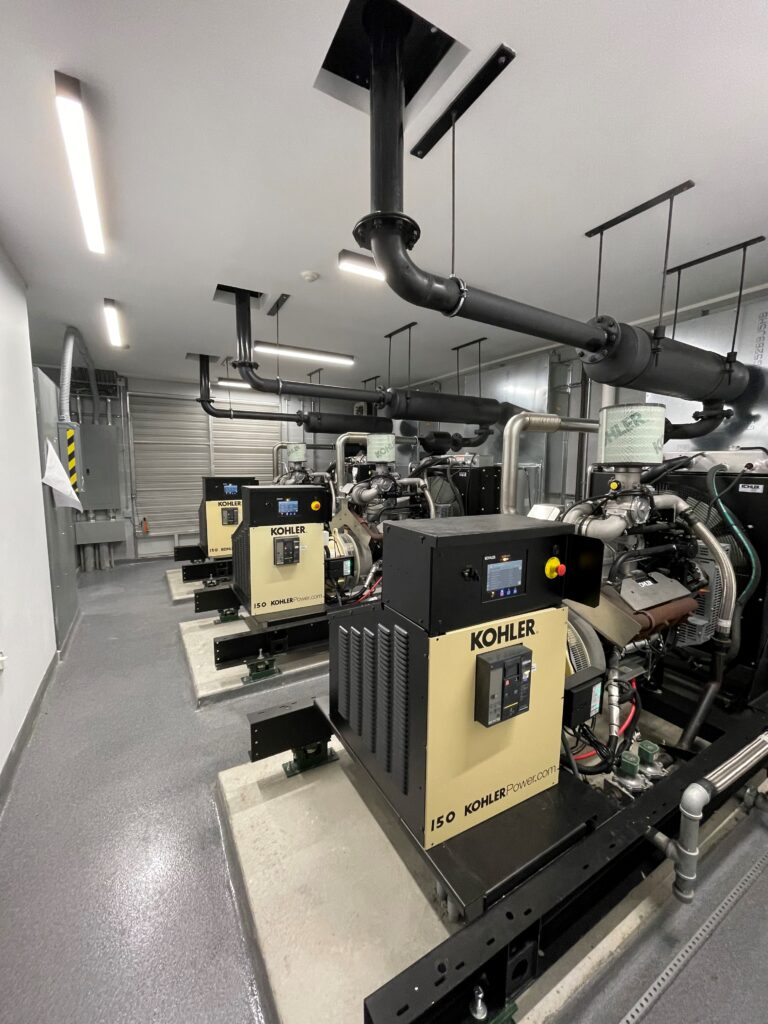
- Mind your exhaust routing. When using extension kits or running exhaust through walls or enclosures, ensure all connections are sealed, properly supported, and terminate in a location where fumes cannot re-enter any occupied space.
- Use manufacturer-approved components. Off-brand or improperly sized exhaust parts can void warranties, create leaks, and introduce back pressure problems.
Positioning Matters as Much as Maintenance
Even a perfectly maintained exhaust system can create problems if the generator is positioned incorrectly. Always:
- Keep generators at least 20 feet from windows, doors, and air intakes
- Ensure exhaust is directed away from work areas and enclosures
- Never operate a generator inside a building, garage, tent, or partially enclosed space, even with the door open
On a busy jobsite, it’s easy to move equipment around without thinking about exhaust orientation. Make exhaust direction part of your equipment setup checklist every time.
The Bottom Line
The exhaust system isn’t glamorous, but it’s fundamental. It protects your workers, protects your engine, and keeps your generator running at the level of performance you depend on. Whether you’re running a compact unit at a remote work site or a large industrial generator powering a full operation, the exhaust system deserves the same respect and attention you give to your engine oil and fuel.
If you have questions about exhaust system maintenance, proper generator positioning, or replacement components, our team is ready to help. Contact us to keep your equipment operating safely for the long haul.